2019

Gait & Posture

Unsupervised gait retraining using a wireless pressure-detecting shoe insole

Jade He, Kevin Lippmann, Najia Shakoor, Christopher Ferrigno, Markus A. Wimmer

Department of Orthopedic Surgery, Rush University Medical Center, Chicago

Keywords

osteoarthritis, knee adduction moment, gait modification, feedback, wireless sensor insole

Abstract

Background The knee adduction moment (KAM) is a surrogate measure of mediolateral distribution of loads across the knee joint and is correlated with progression and severity of knee osteoarthritis (OA). Existing biomechanical approaches for unloading the arthritic medial knee compartment vary in their effectiveness in reducing KAM. This study employed a completely wireless, pressure-detecting shoe insole capable of generating auditory feedback via a smartphone. Research question To investigate whether auditory cues from a smartphone can prompt subjects to adjust their gait pattern and reduce KAM. Methods Nineteen healthy subjects underwent gait training inside the lab (Phase 1) and received auditory cues during mid- and terminal stance to medialize their foot COP (center-of-pressure). This initial training period was continued unsupervised while walking around campus (Phase 2). Results After Phase 1, subjects reduced their KAM by 20.6% (p= 0. 001), a finding similar to a previous study that used a wired, lab-based insole system. After further unsupervised training outside the lab during Phase 2, subjects were able to execute the newly learned gait pattern without auditory feedback still showing a KAM reduction of 17.2% (p < 0.001). Although, speed at Phase 2 was lower than at baseline (p= 0.013), this reduction had little effect on KAM (r=0.297, p= 0.216). In addition, the adduction angular impulse was reduced (p= 0.001), despite the slower speed. Significance Together, these results suggest that the wireless insole is a promising tool for gait retraining to lower the KAM and will be implemented in a home-based clinical trial of gait retraining for subjects with knee OA.

Moticon's Summary

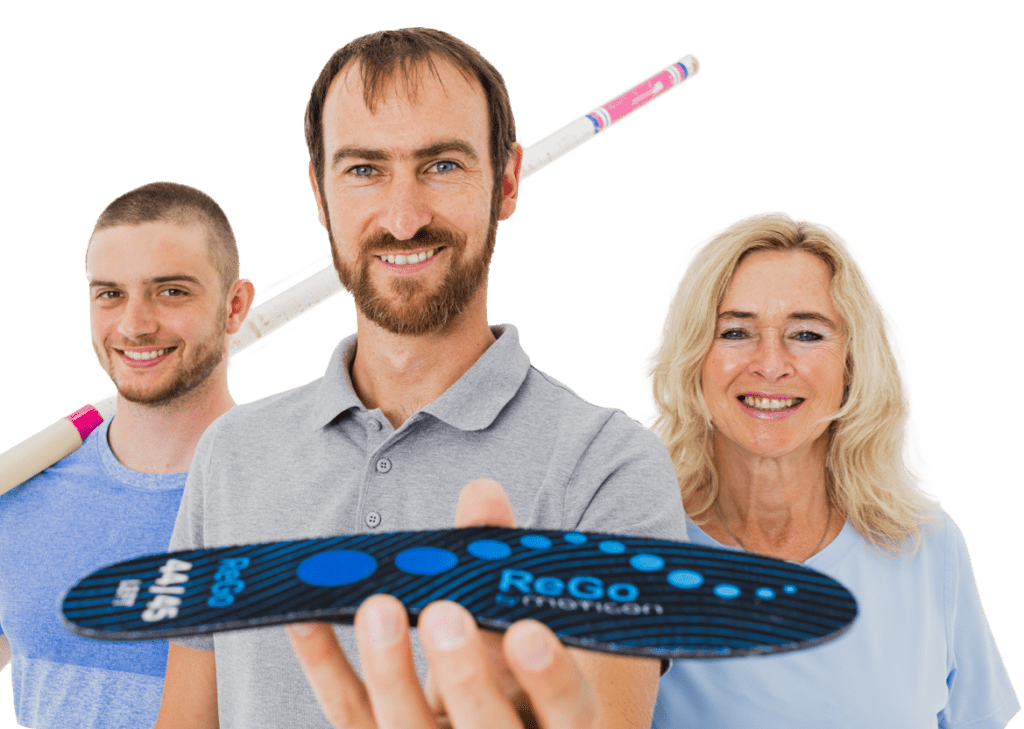
This was concerned with reducing the knee adduction moment (KAM) with a unsupervised gait retraining protocol. Reduction of the KAM is a common target for interventions is patients with Osteoarthritis. The gait retraining was intended to medialize center of pressure at the foot during walking which was hypothesized to reduce KAM. The gait retraining leveraged Moticon sensor insoles to provide feedback on pressure distribution. A customized Moticon app was used to provide auditory feedback to subjects based on their pressure distribution. Nineteen health subjects participated in the training protocol. In a first phase subjects took part in an initial supervised training which involved additional feedback by study personnel. Subsequently, in the second phase, subjects participated in the unsupervised training. At baseline as well as after both phases additional gait test were performed to attain join angles using a motion capture system. Results revealed reduced KAM after both training phases showing that patients were able to maintain the altered gait pattern in unsupervised training which they previously learned during the supervised phase 1.

Contact Us
Book a free online demo or use the contact form to get in touch

Newsletter
Subscribe to our newsletter for regular updates

Schedule an Online Demo

Get a hands-on overview of our products, find the best choice, discuss your application and ask questions.

30 minutes

Web conferencing details will be provided upon confirmation

You are currently viewing a placeholder content from Google Calendar. To access the actual content, click the button below. Please note that doing so will share data with third-party providers.

More Information

You Would Like to Get in Touch?

Write us a message on product related questions or with regards to your application.  We are here to assist!


Stay one step ahead!

Subscribe to our newsletter for the latest information on case studies, webinars, product updates and company news

The form was sent successfully.

You will be contacted shortly.

Get Support

Check our FAQ database for answers to frequently asked questions

Describe your issue in as much detail as possible. Include screenshots or files if applicable.